
Family Meal Delivery in Puchong: Planning Your Weekday Lunches and Dinners
Family meal delivery in Puchong, planned week by week: a headcount for each lunch and dinner, two deliveries a day, rice, and real family orders.
 EdwinPublished 11 Sept 2026Updated 6 Oct 202612 min read
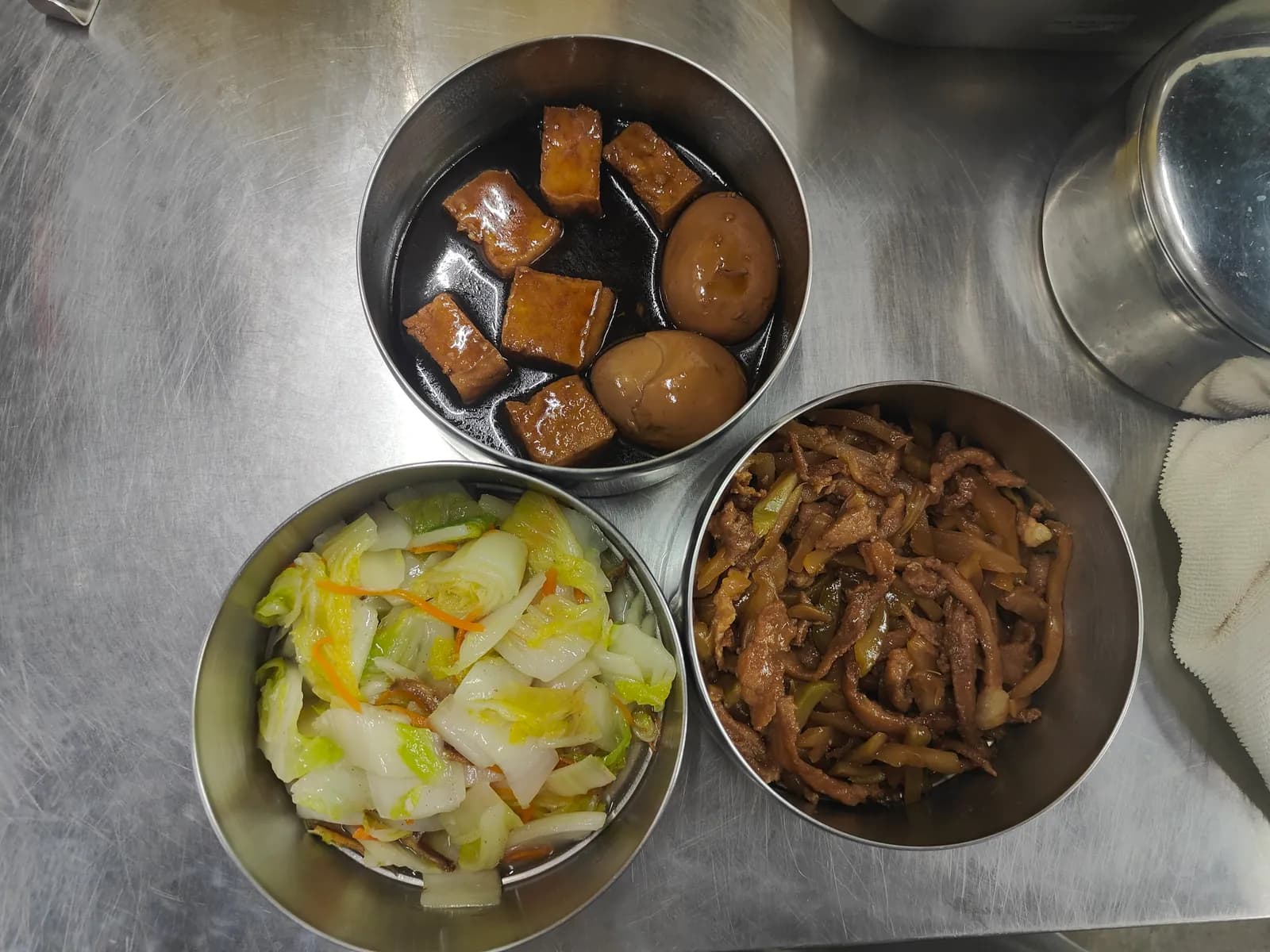
Family meal delivery works best when it follows the week your household really lives, not a package name. Some households need dinner delivered every workday. Others need lunch for someone at home, or both meals on particular days. Start with your family's actual routine, then tell us what to prepare.
This article covers the planning step: turning a busy household's Monday to Friday into a clear list of lunch and dinner sessions, and showing what home meals delivered to a family actually look like when they arrive. If you already know your sessions and only want to check the ordering details and prices at a glance, our Puchong ordering checklist covers what to confirm in your first message.
Aunty Home Cooking
Order home cooked meals in Puchong
3 home cooked dishes every meal, from RM15 per pax, Monday to Friday. Free delivery in Puchong and Bandar Sunway.
1. Map the week, meal by meal
Write down who eats at home at lunchtime and who returns for dinner from Monday to Friday. You can order lunch only, dinner only or both. There is no minimum: even a one-person order for one day is possible.
If the number eating at lunch differs from dinner, send both numbers when you enquire. We will tell you what we can arrange. Do not assume that one headcount automatically applies to every delivery.
A simple grid works well. Put Monday to Friday across the top and lunch and dinner down the side, then write in each box the number of people who will actually eat that meal at home. An empty box means no delivery for that session. It takes a few minutes and avoids the most common planning mistake: ordering for the whole household when only part of it is home.
While you fill in the grid, think about:
- Who works from home, works shifts or is retired, and is usually in at lunchtime
- Which evenings someone regularly eats out, works late or has another family commitment
- Whether a grandparent, helper or older child will be home to receive a delivery, even if they are not eating it
- Days that already look different this month, such as a planned trip or relatives coming to stay
For example, imagine a household of three where one parent works from home on Mondays and Wednesdays. Their grid shows lunch for one on those two days and dinner for three from Monday to Thursday, because Friday evenings are usually spent with the grandparents. That is two lunch deliveries and four dinner deliveries in the week, each with its own headcount.
Keep the grid as the record you send us. If the headcount for one session changes later, update that box and tell us at least one day ahead, the same notice that applies to skipping or pausing a day.
Why a grid beats a fixed family package
Weekly family plans are often sold as one bundle: a single headcount, the same session every day, a set run of days and a price you only hear after asking. Few Puchong families live like that. A parent works from home twice a week, a teenager has an evening class, the grandparents host dinner on Fridays.
Here, every box is an order in its own right. A Thursday can stay empty, a lunch box can hold one person while the dinner box beside it holds three, and each is charged at the published rate for its own headcount. When you ask for a quote, the grid is what we price, so there is nothing to fit your family into.
2. Allow for two deliveries if you order both
Lunch and dinner have different dishes and arrive separately. Each meal has three dishes. If you order both, plan how each delivery will be received rather than thinking of them as one drop-off.
On your grid, give every filled box a second note: how that meal gets into the house. Some boxes will say a name, such as the grandparent who is in at midday. Others will say "hook", meaning the door-hook swap used when nobody answers; the Bandar Sunway condo meal-delivery checklist explains the swap, along with what changes in a condo where only the guardhouse or lobby is allowed.
Each route has a consistent daily window, which we confirm on WhatsApp when you start. Once you know it, check it against your household's day. A lunch delivery that arrives while everyone is out needs as much planning as an evening one, so decide in advance who receives each meal or which handover you will use.
For each session you order, answer these questions before the first day:
- Who will be home to receive it, or will the meal be exchanged on the door hook?
- In a condo, does management allow delivery to your unit, or only to the guardhouse or lobby?
- If the meal is left at the guardhouse or lobby, who will collect it, and how soon?
- If nobody is home at either meal, is the container exchange arranged for both deliveries?
The grid also shows you how many container sets the week really needs. A household that fills both boxes on a day when the house is empty will want a spare set in circulation, and that can be arranged for a day and handed back; mention any such days when you send the grid.
Plan when the food will be eaten, too. Meals are cooked fresh and meant to be eaten soon after delivery. If a meal will wait a while before anyone sits down to it, put it in the fridge promptly and reheat it thoroughly rather than leaving it at room temperature.
3. What home meals delivered to a family look like
A plan on paper is easier to trust once you can picture what fills each box. Whatever the headcount, a session is three home-cooked dishes, each packed in its own container, with rice only if you have added it. Ordering for more people changes how much goes into each container, not how many dishes there are.
A two-person and a three-person order
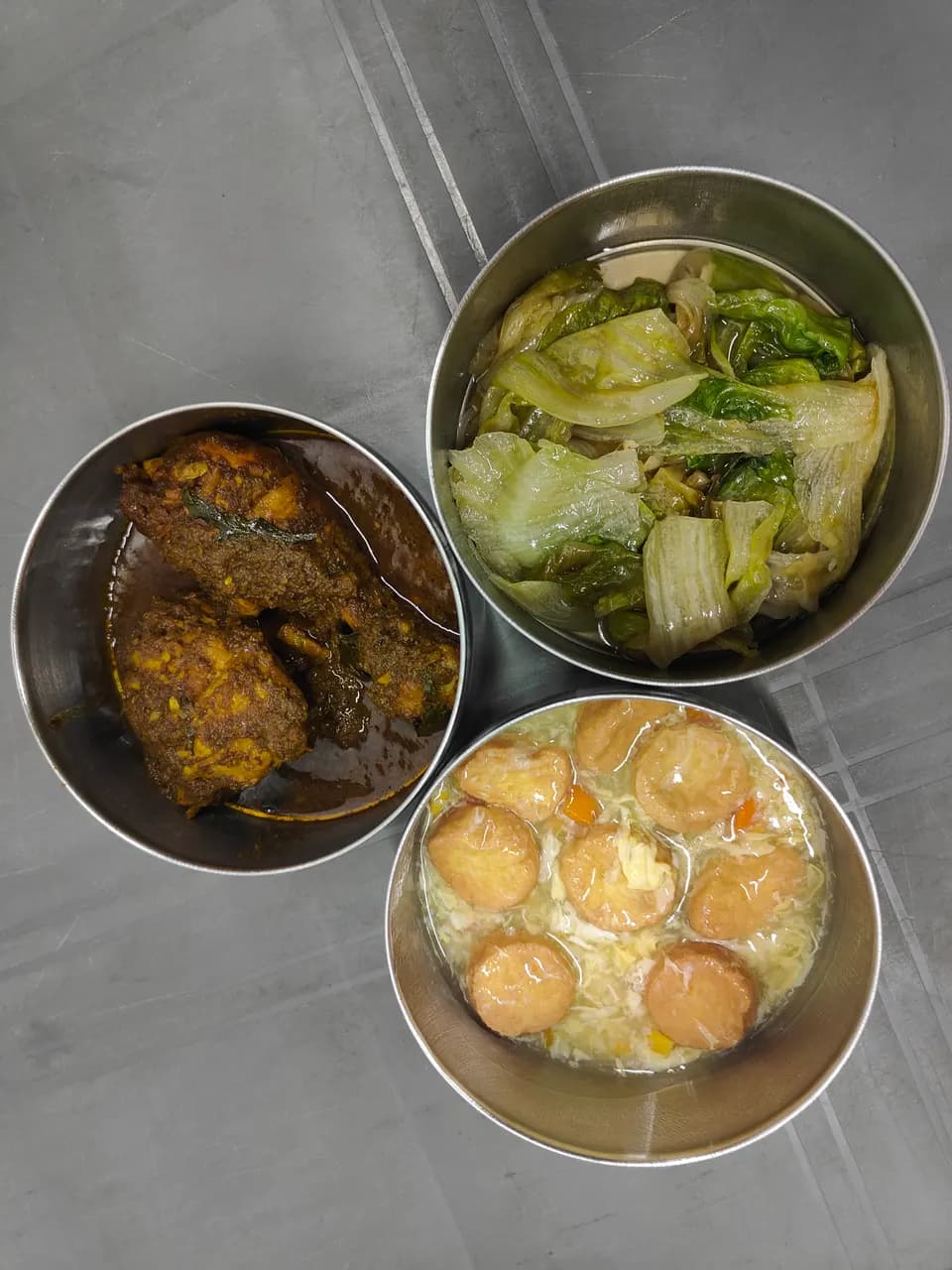
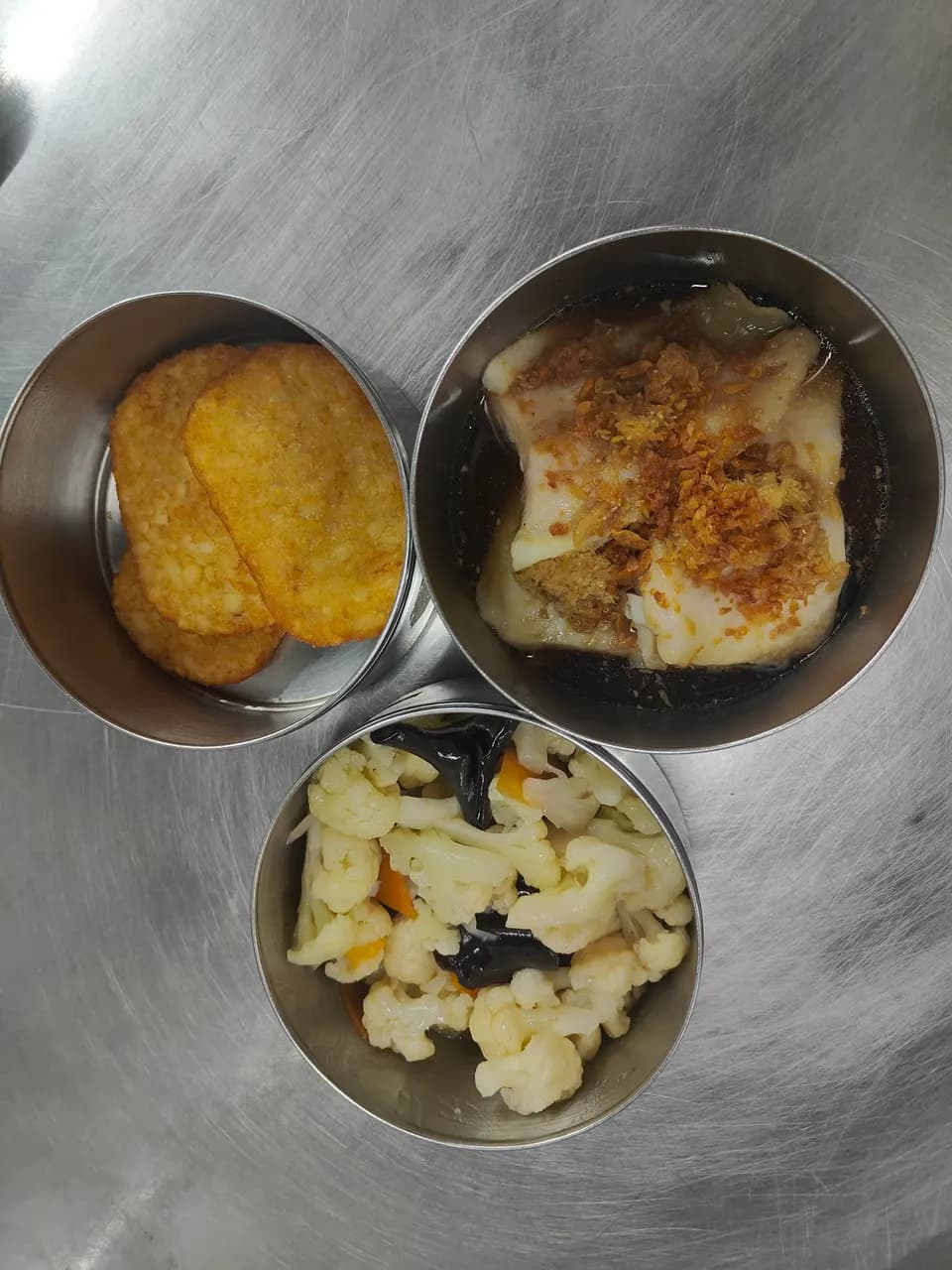
The two photos after this section are real past family orders, packed in tiffin carriers. They are records of particular days, not dishes you can reserve.
The first was a two-person order: a piece of fish in a dark sauce, cooked cabbage, and egg tofu in a light broth with carrot. Between them they show the usual balance of a set, with one main dish, one vegetable, and a softer dish that brings some broth to the table.
The second was a three-person order: golden fried slices, a piece of fish topped with fried garlic, and cauliflower cooked with wood ear fungus and carrot. It is still three dishes. The containers are simply filled for three people instead of two.
When you look at family orders like these, notice the things that matter for a weekly plan:
- Each dish travels separately, so a sauce never runs into the vegetables
- Neither order includes rice, which is a separate add-on at RM2 per person
- A main dish, a vegetable and a third dish with a different texture make up each set
- Lunch and dinner follow the same three-dish shape, though the dishes differ between them
Because a family eats these meals several days running, variety across the week matters more than any single set. The dishes change daily, so your week will not repeat either example box for box.
4. Picture an ordinary household week
These examples are illustrations, not customer stories.
One couple is out at work at lunchtime. They order dinner for two, Monday to Friday, and add rice because they do not cook it at home. On a day both are out when dinner arrives, they agree on the door-hook handover.
Another household has someone at home for lunch but eats dinner elsewhere twice a week. They order lunch on the days it is useful and dinner on the other days. They send the headcount for each session and confirm the schedule with us before starting.
You do not need to copy either pattern. A simple list of days, meals and people gives us a better starting point than “a package for the whole family.”
Patterns like these are why it helps to describe the week before choosing a package. Each filled box on the grid is priced as one meal at the published rate for its headcount: RM15 for one person, RM28 for two or RM42 for three, with rice at RM2 for each person who takes it. So a box for one at lunch and a box for three at dinner are simply two meals at two different rates. The home meal package page holds the full list, and we confirm the week's total on WhatsApp.
To see how that adds up, go back to the household of three from section 1 and imagine they also want rice for two people at each dinner. Their week is two lunches at the one-person rate, four dinners at the three-person rate and eight portions of rice, and nothing else is added. Your own total is the one we send back against your grid.
Common mistakes when planning a weekday schedule:
- Counting everyone in the household for every meal, including people who eat out at lunch
- Forgetting that lunch and dinner are two deliveries, each needing someone at home or an agreed handover
- Assuming rice comes with the meal
- Leaving a known trip or family outing off the list, then trying to change it at the last minute
5. Settle rice and food requests for each order
Add a small rice figure in the corner of each grid box. It does not have to match the headcount in that box, and it can differ between lunch and dinner, for instance on evenings when someone at home cooks a pot of rice anyway. For the less obvious combinations, the home meal package page shows how the rice add-on is counted per person.
Requests work the same way across the week: they follow the person, not the day. If your father avoids chilli, that note applies to every box he appears in. Our guide to home-style meal requests lists what the kitchen can adjust and where allergy requests have limits, and it is worth reading before you add notes to the grid.
When a request belongs to only one person in a box, say whose it is and ask what can be arranged for that session, rather than assuming the whole meal will be cooked around it.
Because the kitchen buys at the market each morning and the dishes change daily, plan the week around sessions and people rather than particular dishes. You cannot reserve a steamed fish for Wednesday or a curry chicken for Friday, so the grid stays about who is eating, and requests do the steering. For a sense of what we cook, see the prepared meal delivery menu; it shows examples from the regular rotation, not a schedule for your week.
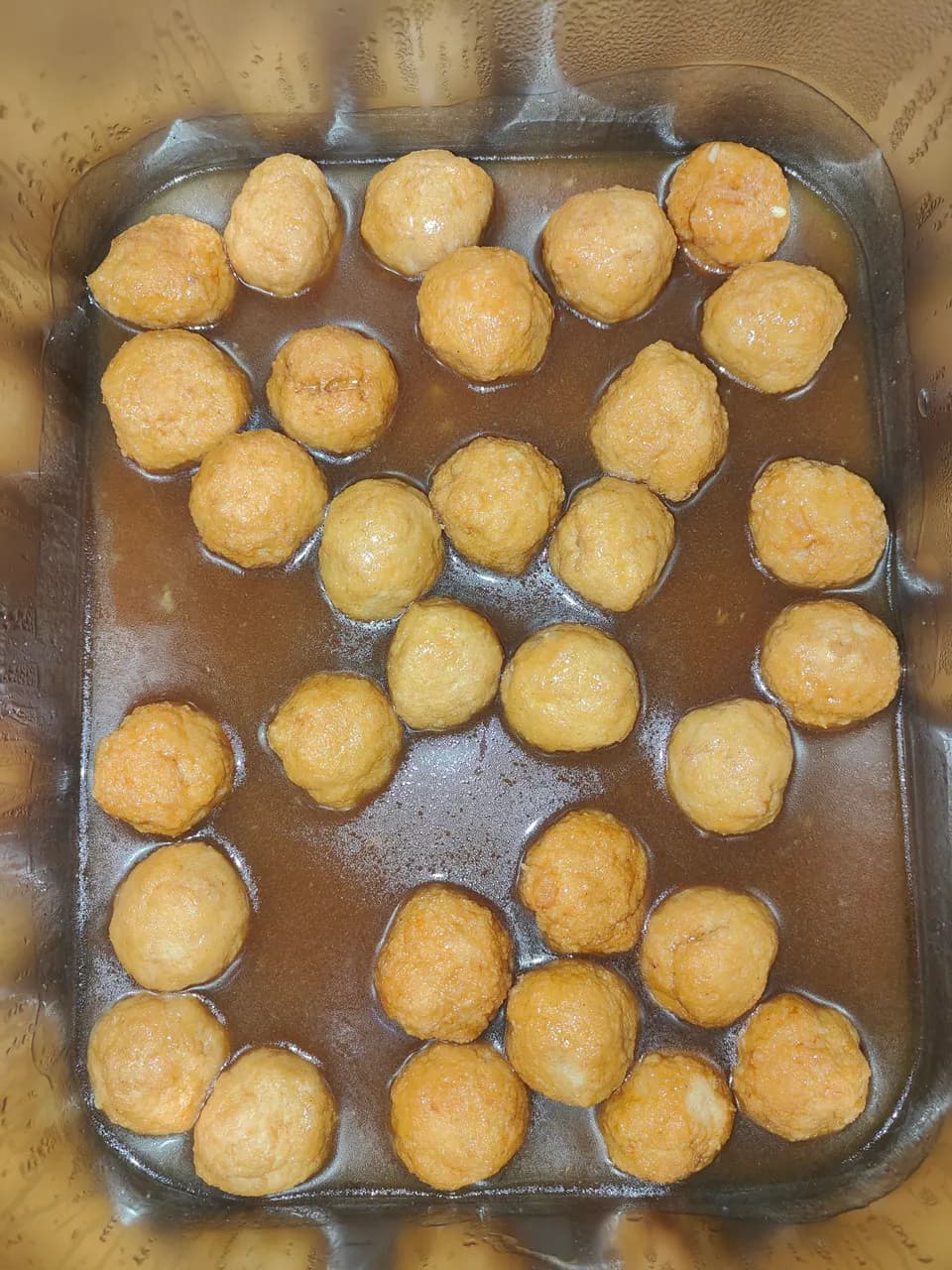
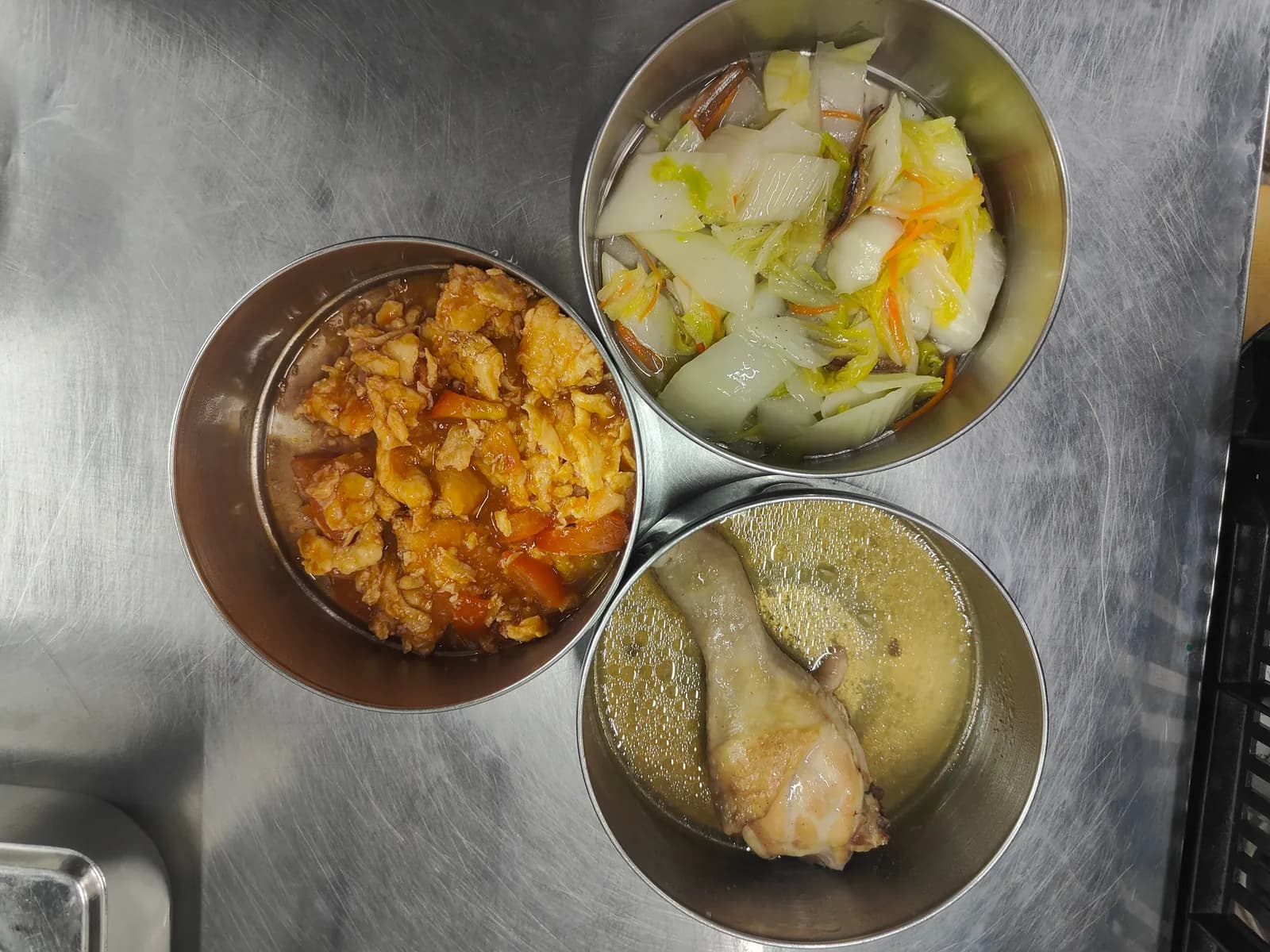
The dish examples pictured after this section were photographed in the kitchen's larger trays: bite-sized golden fried pieces, shredded cabbage cooked with strips of carrot, and round golden balls in a light brown gravy. In a family order, a dish like these arrives in its own tiffin container rather than a tray.


6. Keep the plan flexible
A grid is a plan, not a promise, and family weeks rarely run exactly as drawn. The rule that keeps it flexible is a single day's notice on WhatsApp: rub out a box that early and, if it was a paid day, it moves to a later date we agree. The full rules on pausing, skipping and stopping are in our FAQ.
Most changes to a weekday plan can be seen coming a day or more ahead: a school event, a work trip, a relative's visit. A useful habit is to look over the next few days whenever the family's plans shift, and send any change as soon as it is certain.
With at least one day's notice, you can ask to:
- Skip one session, such as dinner on an evening the family eats out
- Pause for several days, for example during a trip
- Change the headcount for a session when someone will be away or a guest is coming
- Stop the arrangement altogether, as there is no contract
Late changes are different. Ingredients are bought and cooking starts each morning, so a change sent after that may not be possible for that day. When a paid day is moved, pick a replacement date when someone will be home or the handover is already arranged.
7. Confirm the first week before it starts
Before the first delivery, send the finished grid on WhatsApp and read our reply against it box by box, so that we both work from the same plan. Getting the meals to a Puchong address adds nothing to the bill. Once the grid and quote match, the first period is paid in advance by DuitNow, bank transfer or cash; we send the details in the same chat. For the full list of what to confirm before ordering, our Puchong ordering checklist goes item by item.
For example, a message for a family week might read: “We are in Puchong at [taman and full address]. We need dinner Monday to Friday for [number] people and lunch on [days] for [number]. Rice for [number] at dinner. One person does not eat pork. If nobody is home, dinner can go on the door hook. Please confirm the delivery window and quote.”
Before the first day, check that you have:
- Confirmed days, sessions and the headcount for each
- Your rice choice for each session
- A reply on any food requests
- An agreed handover for each session, including where the hook is if you use one
- Your own containers ready
- Payment made before the first delivery
Plan your family's week
WhatsApp +60 10-865 5536 with your Puchong address, the days and meal sessions you need, the headcount for each, and your rice choice. Tell us how each delivery can be received, and we will send back the quote for your family meal delivery box by box. For the full service details, see home meal delivery in Puchong.
The homepage of Aunty Home Cooking introduces the meals before you plan individual sessions.
FAQ
Yes. We are a home kitchen in Puchong cooking lunch and dinner from Monday to Friday, and delivery is free anywhere in Puchong and Bandar Sunway. For other areas, ask on WhatsApp first.
Yes. Lunch only, dinner only and both are available.
No. They are separate deliveries with different dishes.
Yes. There is no minimum order or contract; tell the kitchen which weekdays and meal sessions you need.
Not necessarily. Mark the empty boxes on your grid and we will agree a handover for each, such as the door hook where we can reach your door.
Each delivery is one meal at the published rate for its headcount, from RM15 for one person to RM42 for three, plus RM2 per person for rice. Send different lunch and dinner numbers when you enquire and we will tell you what we can arrange.
Yes, with at least one day's notice on WhatsApp. A change sent after shopping and cooking have started for that day may not be possible.
Share this article
Related Articles
Home-Cooked Food Delivery in Puchong: What to Confirm Before You Order
Home-cooked food delivery in Puchong: what a real order looks like, published prices from RM15, rice, skip rules, containers and payment.
 Edwin4 Sept 202610 min read

Meal Delivery for One, Two or Three People: Choosing Your Size in Puchong and Bandar Sunway
Meal delivery for one, two or three people in Puchong and Bandar Sunway: the same three dishes packed for each size on one day, prices and rice per person.
Edwin9 Oct 202611 min read
About the author
Edwin
Edwin writes practical guides about Aunty Home Cooking's meals, ordering and delivery.
This guide uses the kitchen's published service details and owner-supplied photographs of past meals. Confirm current order details with the kitchen before paying.